

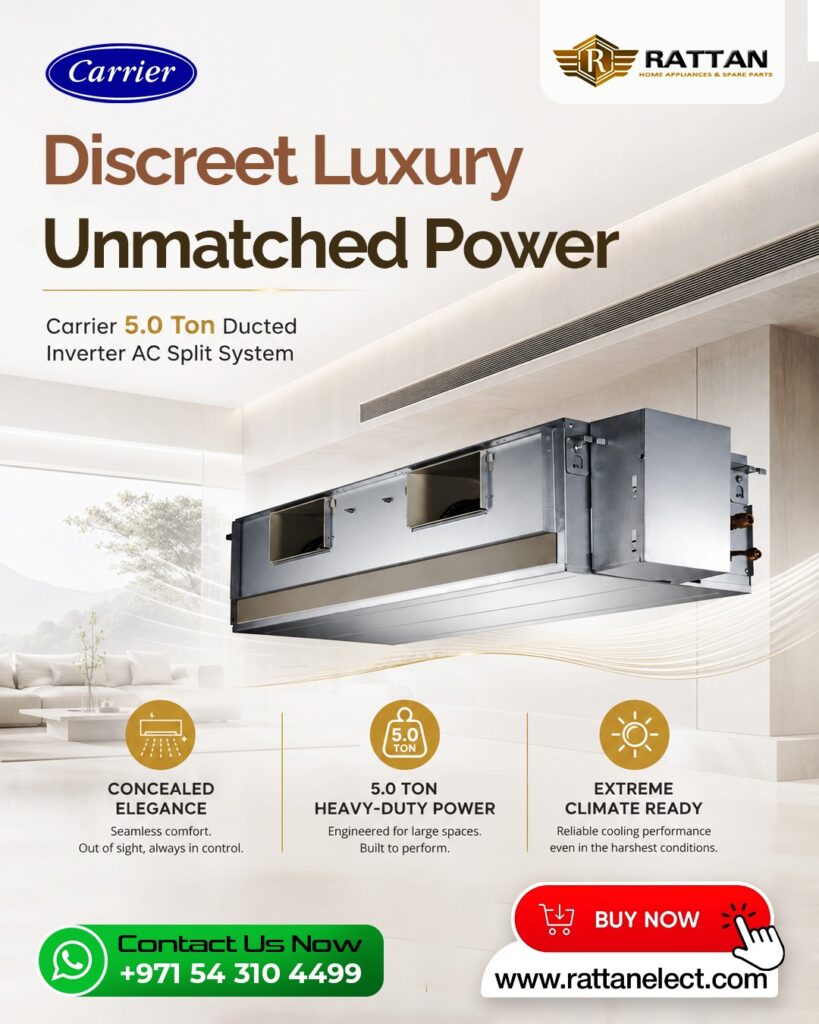

Carrier 5.0 Ton Ducted Inverter AC Split System – Powerful & Energy-Efficient Cooling for Large Spaces
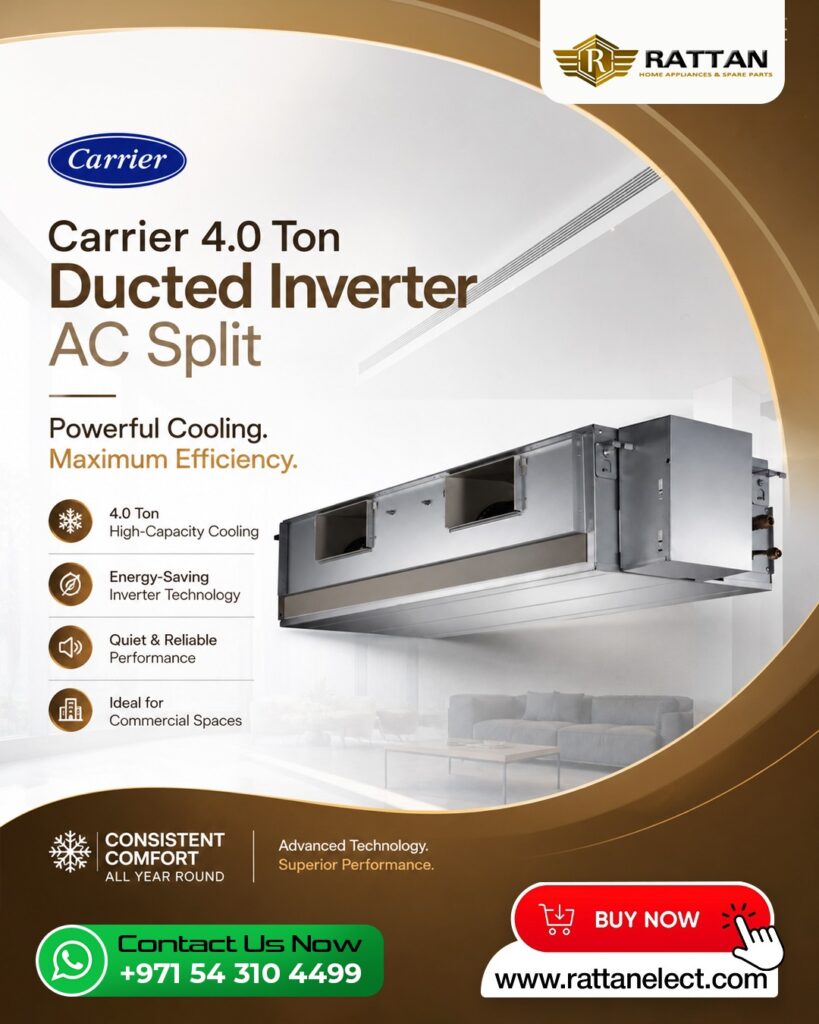
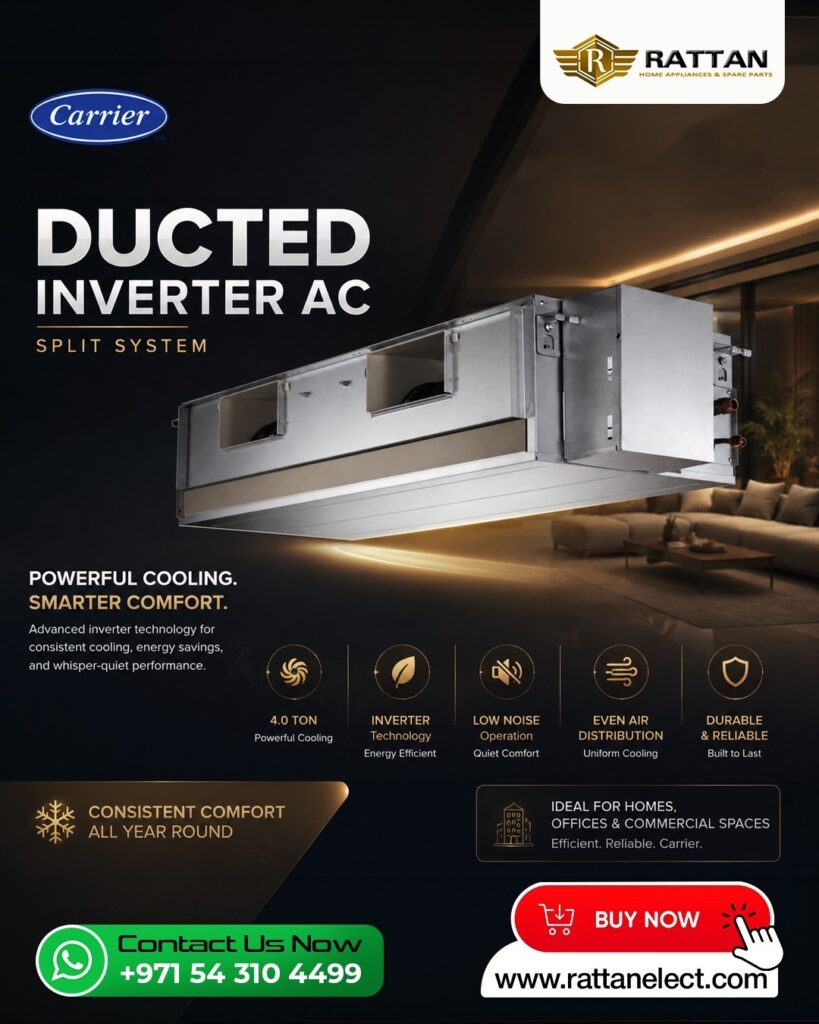
Experience superior climate control with the Carrier 5.0 Ton Ducted Inverter AC Split System, a premium HVAC solution engineered for powerful, efficient, and discreet cooling. Designed for large residential and commercial spaces, this advanced ducted air conditioning system delivers consistent comfort while maintaining the aesthetics of modern interiors through its concealed installation.
Unlike conventional air conditioners, the Carrier ducted inverter system is installed above the ceiling, leaving only sleek air vents visible. This hidden design creates a clean and sophisticated look, making it an ideal choice for luxury villas, apartments, offices, hotels, restaurants, showrooms, hospitals, educational institutions, and retail outlets. The system distributes conditioned air evenly throughout the space, eliminating hot and cold spots and ensuring maximum comfort in every room.
Powered by inverter technology, the Carrier 5.0 Ton Ducted Split System continuously adjusts compressor speed based on the cooling demand. Instead of repeatedly switching on and off, it operates intelligently to maintain a stable indoor temperature while consuming significantly less electricity. This results in lower energy bills, quieter operation, faster cooling, and a longer equipment lifespan.
With an impressive 5.0-ton cooling capacity, this unit is specifically designed to perform efficiently in the challenging weather conditions of the UAE and the Middle East. Even during extreme summer temperatures, the system delivers reliable and uninterrupted cooling, making it suitable for environments that require consistent indoor comfort throughout the year.
The Carrier ducted inverter AC also features durable construction and high-quality components that ensure long-lasting performance with minimal maintenance. Its efficient airflow design provides balanced cooling across large areas while operating quietly, creating a comfortable environment for homes and workplaces alike.
Whether you are planning a new construction project or upgrading an existing HVAC system, the Carrier 5.0 Ton Ducted Inverter AC Split System offers the perfect combination of performance, energy efficiency, reliability, and elegant concealed installation. Its innovative technology helps reduce operational costs while delivering premium comfort and dependable cooling every day.
Key Features
- Powerful 5.0 Ton cooling capacity for large spaces
- Advanced inverter compressor technology for enhanced energy efficiency
- Concealed ducted installation for a modern, seamless interior
- Uniform air distribution across multiple rooms
- Low-noise operation for improved indoor comfort
- Built to withstand extreme UAE climate conditions
- Fast cooling with stable temperature control
- Reduced electricity consumption and operating costs
- Heavy-duty construction for long-lasting durability
- Suitable for villas, offices, hotels, restaurants, commercial buildings, and retail spaces
- Easy integration with centralized HVAC systems
- Trusted Carrier quality backed by reliable performance
At Rattan Home Appliances & Spare Parts, we offer genuine Carrier Ducted Inverter AC Systems with expert guidance, competitive pricing, and dependable customer support. Whether you need a complete cooling solution for a commercial project or a premium ducted air conditioning system for your home, our team is committed to helping you find the right Carrier product for your requirements. Choose Carrier for unmatched performance, energy savings, and year-round comfort.